Every week someone asks me the same question: if the casino always wins, why do smart people still play? The honest answer is that the house edge is a tax on hope, not a guarantee of doom — and once you understand exactly how that tax is calculated, gaming stops being a coin flip and starts being a series of informed decisions. Whether you are spinning slots at 2 a.m. or grinding a low-stakes poker table on a Sunday, the numbers are knowable. Most players just never bother to look at them.
Slot return-to-player percentages get thrown around like they are guarantees. They are not. A 96% RTP slot means that across millions of spins, the machine theoretically returns 96 cents for every dollar wagered. It says nothing about your next 200 spins. You can hit a 500x multiplier on spin three and walk away up, or feed a 96% machine for four hours and lose everything. The variance is the story; the RTP is just the backdrop.
Here is what actually matters when you compare slots:
My rule of thumb: pick a volatility tier that matches your bankroll, not your mood. A $50 bankroll on a high-volatility slot is a lottery ticket. A $50 bankroll on a low-volatility slot with 50-cent spins gives you a real session — maybe 300 to 400 spins — and a genuine chance to cash out.
Bookmakers do not need to rig outcomes. They just need a margin, and they build it into every price. If a tennis match is genuinely 50/50, fair odds would be 2.00 on both sides. Most books will list 1.91 and 1.91. That gap is the vig, roughly 4.7% in this example, and it is the single most important number in sports betting.
Two practical takeaways:
Bonus bets and free bet tokens get marketed like free money, but they usually come with minimum odds requirements (often 1.50+), expiry windows, and stake-not-returned conditions. Read the terms before you get excited about the headline number.
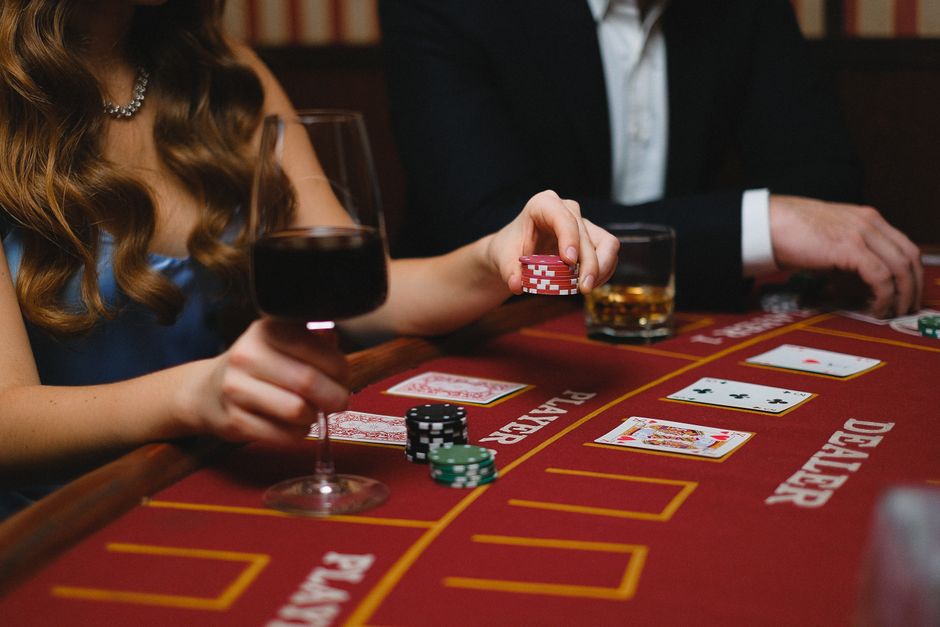
Poker is the one game in this list where a good player can beat a bad one over time — not through luck, but through information. The classic tells still work, just subtler than the movies suggest. A player who snap-calls on a wet board usually has a draw or a medium-strength hand they want to control the pot with. A player who tanks before shoving on the river is often bluffing, because strong hands tend to bet faster.
The more reliable edge, though, is math: L'Avenue Dubai goes into the finer points.
Micro-stakes online poker (1c/2c to 25c/50c) is the best training ground in the entire iGaming ecosystem. The rake is brutal and the players are chaotic, but the volume is cheap and the lessons are permanent.
A 100% match bonus up to $500 sounds like a gift until you find the 40x wagering requirement attached to it. That means a $500 bonus requires $20,000 in total bets before you can withdraw a cent. On a 96% RTP slot, the expected loss on that $20,000 is roughly $800. Suddenly the bonus is not a gift — it is a rebate with strings.
Before claiming anything, check these four items:
The genuinely good offers are usually the ones with lower headline values but 20x or 30x wagering. A $100 bonus at 25x is worth more than a $500 bonus at 50x for most players.
It is not a secret system. It is a session log. Track what you deposit, what you bet on, what you withdraw, and how you felt. After 30 sessions, patterns emerge that no strategy guide can teach you. You will spot the games you actually beat, the times of day you play badly, and the bonus terms that quietly ate your bankroll. That log is worth more than any premium tipster subscription.
iGaming rewards curiosity and punishes complacency. The math is public. The terms are published. The variance is real. Learn the numbers, respect the variance, and treat every bonus as a contract rather than a gift. That is the entire edge — and it is more than enough.